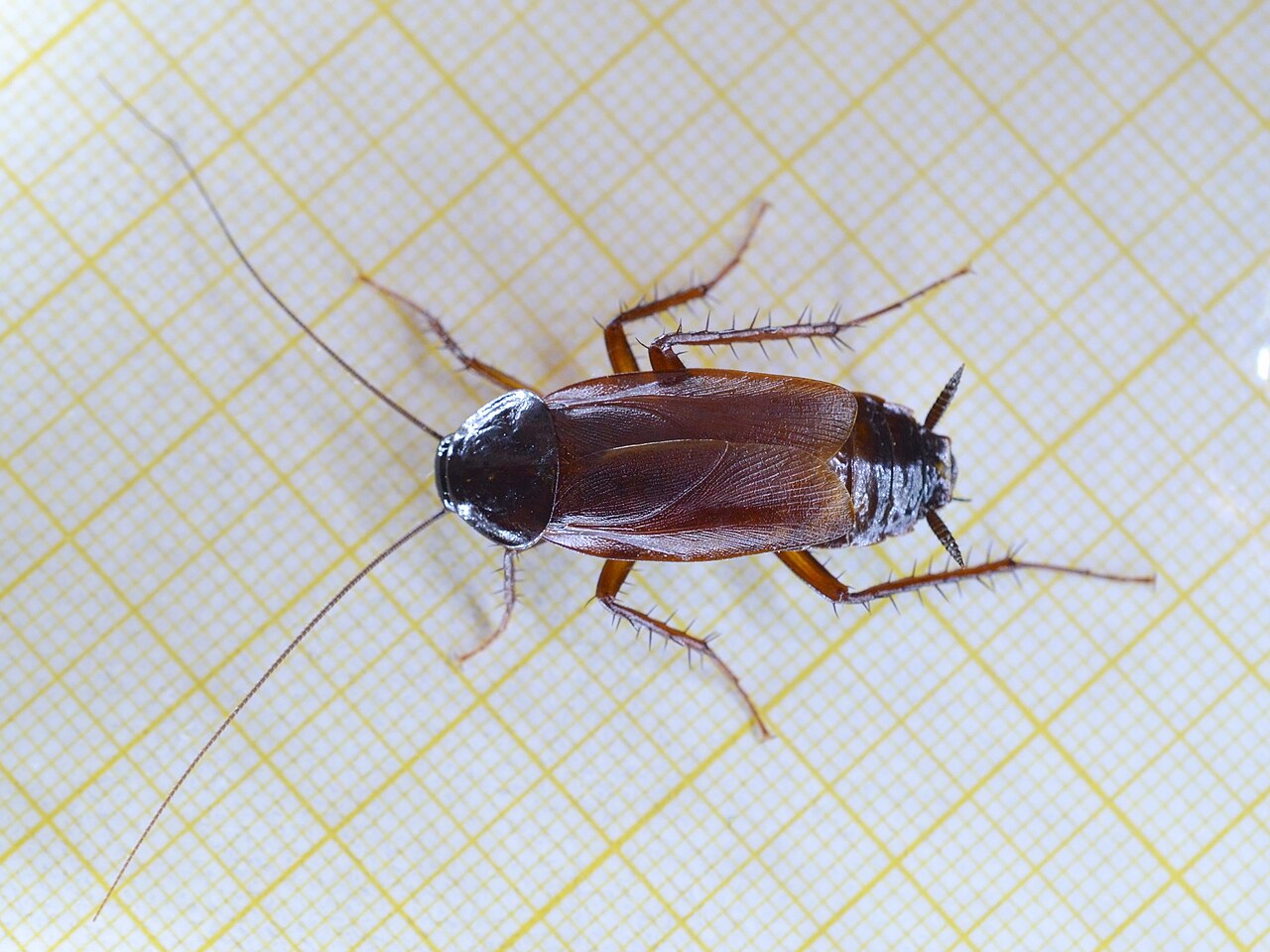

Field comparison: reduced wings need sex context
The dark Oriental cockroach has adult wings shorter than the abdomen; the female’s are especially reduced. That makes “no full wings” an unreliable shortcut for identifying a nymph. Compare body shape and wing coverage together.
An adult with long wings covering the abdomen and a pale head-shield border fits the American cockroach comparison better. A dark beetle can also mislead when antennae and wing-cover details are missing. The damp location supports inspection context but does not resolve those body differences.
Reference: San Diego County: Cockroach species and signs · Penn State Extension: Oriental Cockroaches
What to check and record
- Record whether developed wings stop short of the abdomen or only small pads are present.
- Note the exact location: a damp basement, an exterior threshold, and a dry upper cabinet are different observations.
- Photograph the whole insect. Reflections on a shiny body can hide details in a flash photograph.
Compare the alternatives
A wingless-looking insect is not necessarily young: an adult female Oriental cockroach has reduced wings.
American cockroaches usually show a reddish tone and pale border behind the head. Large dark beetles can also be mistaken for roaches.
Check wing coverage before calling it immature
Look at where the wings end relative to the abdomen. Keep the full rear of the insect in frame. The male reference on this page should not be used as the only possible adult appearance: females have much smaller wing pads. If sex and stage are uncertain, record the visible wing coverage rather than forcing a life-stage label.
Describe damp conditions without making them a diagnosis
A basement leak, wet threshold, and drain room are useful inspection context. Photograph the insect and the moisture separately so the maintenance record remains useful even if the insect identification changes. A dark roach found in a dry place still needs identification; habitat preferences should guide questions rather than rule a species in or out by themselves.
Compare dark roaches with dark beetles
A black silhouette hides the differences in antennae, body outline, and wing covers. Use diffuse light and a side view if available, without handling an unknown insect. Include a measurement. If the photograph only shows a shiny oval, ask for another identification step rather than selecting the nearest black insect image from a search result.
Give recurring sightings a stable location name
Use labels such as “basement east door” and “utility sink cabinet” rather than writing “downstairs” each time. Record the date and whether the insect was alive, dead, or a fragment. This allows an inspector to compare activity around building edges with interior findings and to decide which places deserve closer examination.
Keep the context with the clue
Record the date, exact location, visible features, and what remains uncertain. Bring the record to a qualified identifier.
Add this finding to your evidence log →Common questions
Are Oriental cockroaches water bugs?
Some people use that name for them. True aquatic water bugs are different insects; use body features rather than the nickname.
Can an adult have no obvious wings?
Yes. Females have very small wing pads, which is why wing development should be compared with sex as well as age.
Does a wingless-looking adult rule out a cockroach?
No. Female Oriental cockroaches have very reduced wings. Body features and the correct sex or life-stage comparison matter more than expecting every adult cockroach to look fully winged.
Can a leak report replace species identification?
No. Repairing moisture is a maintenance task, while the insect identification guides the pest investigation. Record both and ask how they relate in the inspected setting.
Sources reviewed
These references support the identification notes. They do not imply that the authors have reviewed or endorsed this website.