_(cropped).jpg)
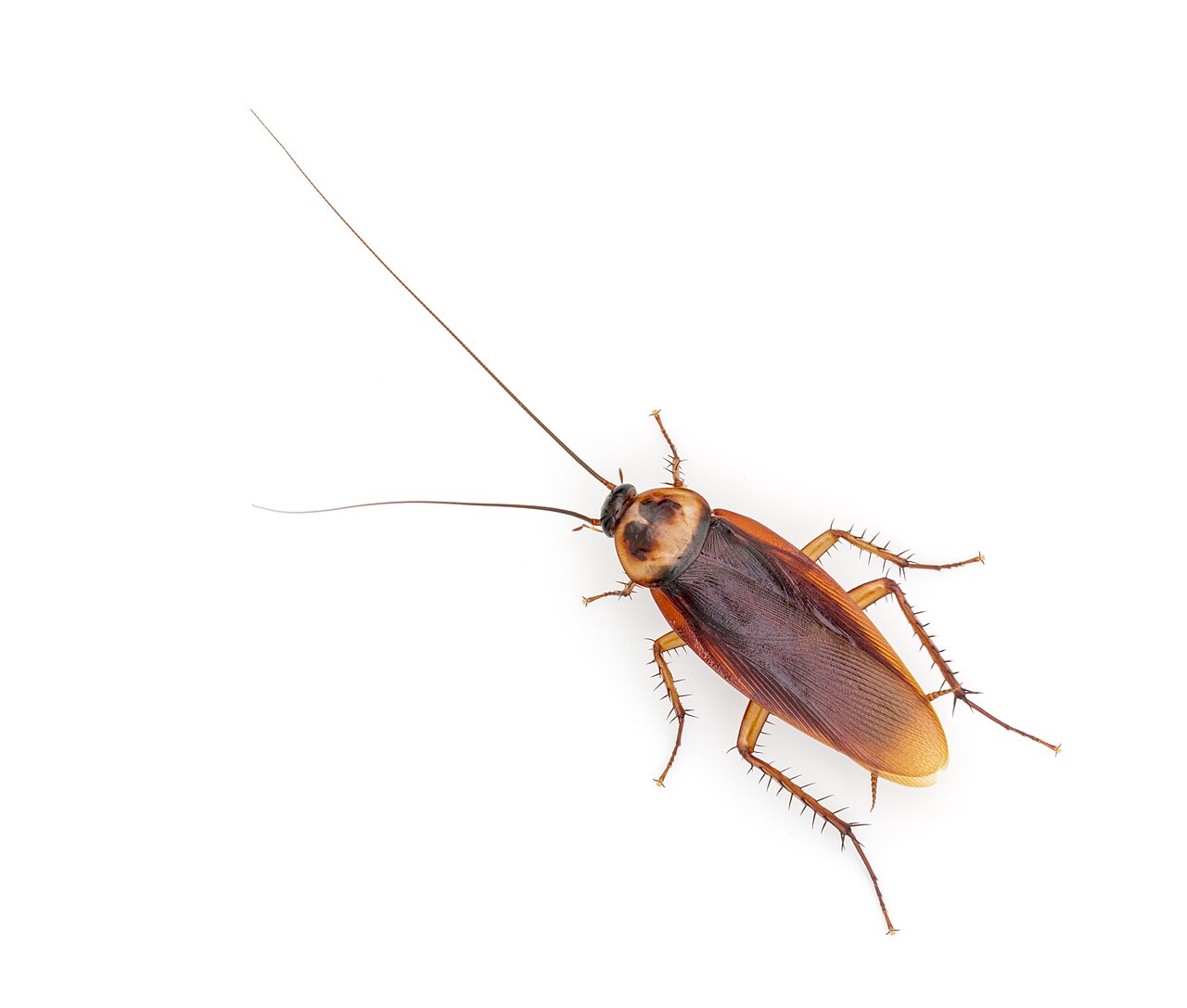
Field comparison: adult wings versus dark nymph margins
San Diego County describes American cockroach adults with wings covering the abdomen and nymphs with darker sides and segment edges. The adult’s reddish-brown color and pale border behind the head belong with those features, rather than functioning as a color-only diagnosis.
Very reduced adult wings and a shiny dark body call for the Oriental cockroach comparison. Small pale crossbands call for another species or stage. An incomplete photograph can leave those alternatives unresolved even when the insect looks large.
Reference: San Diego County: Cockroach species and signs · UF/IFAS: American Cockroach
What to check and record
- Record body length without antennae and include a ruler beside, not on, the insect if this can be done safely.
- Photograph the pale border behind the head in natural light.
- Note nearby exterior doors, damp spaces, and the dates of repeat sightings; do not assume an entry route from one observation.
Compare the alternatives
Oriental cockroaches are typically darker; their adult wing coverage differs from the American cockroach’s.
“Palmetto bug” and “water bug” are common names that may be used loosely. They are not reliable species identifications.
Measure the body, not the impression
Long antennae and outstretched legs can make an insect look much larger than its body. If a scale can be placed nearby without handling it, photograph both in the same plane. Report the units and whether the estimate includes wings. A description such as “huge” conveys surprise but does little to separate several large cockroach species.
Pair the head-shield pattern with the complete insect
Photograph the pale border behind the head and the entire back. Reflections can wash out the border, while warm indoor light can exaggerate a reddish appearance. Retain the original file and compare the life stage. A small nymph should not be rejected simply because it lacks the size or full-wing appearance of the adult reference.
Record the building edge and interior separately
UF/IFAS describes both sheltered outdoor habitats and building occurrences. Your record should show whether the insect was at a threshold, in a basement, or repeatedly deep inside a room. Include nearby moisture as context. An insect beside a drain does not prove a drain entry route; note any route you directly witnessed separately from a suspected one.
Reference: UF/IFAS: American Cockroach
Decide what the next inspection needs to answer
An isolated arrival and recurring findings call for different questions. Ask whether the specimen is correctly identified, whether there is evidence of indoor reproduction, and which accessible entry or moisture conditions warrant attention. Include any nymphs or cases as separate observations. Do not treat a common nickname as enough information to select a whole-house response.
Keep the context with the clue
Record the date, exact location, visible features, and what remains uncertain. Bring the record to a qualified identifier.
Add this finding to your evidence log →Common questions
Can a small reddish roach be an American cockroach?
It could be a nymph, but color and size alone are insufficient. Compare a clear specimen or photograph with a qualified identifier.
Is a palmetto bug definitely an American cockroach?
No. Common names are used inconsistently. A complete insect photograph and location provide a better starting point than the nickname.
Does finding one beside a drain prove it came through the pipe?
No. The final resting place does not establish its route. Describe the location and tell the inspector whether you actually observed emergence from a particular opening.
Sources reviewed
These references support the identification notes. They do not imply that the authors have reviewed or endorsed this website.