FIELD JOURNALRoom checklists
Small bugs in a bathroom: record moisture and movement
Narrow a bathroom insect finding using body features and conditions instead of assuming every insect came from a drain.
IN BRIEF
Record body features and movement alongside actual moisture observations. The room or nearby drain cannot identify the insect or establish where it came from.
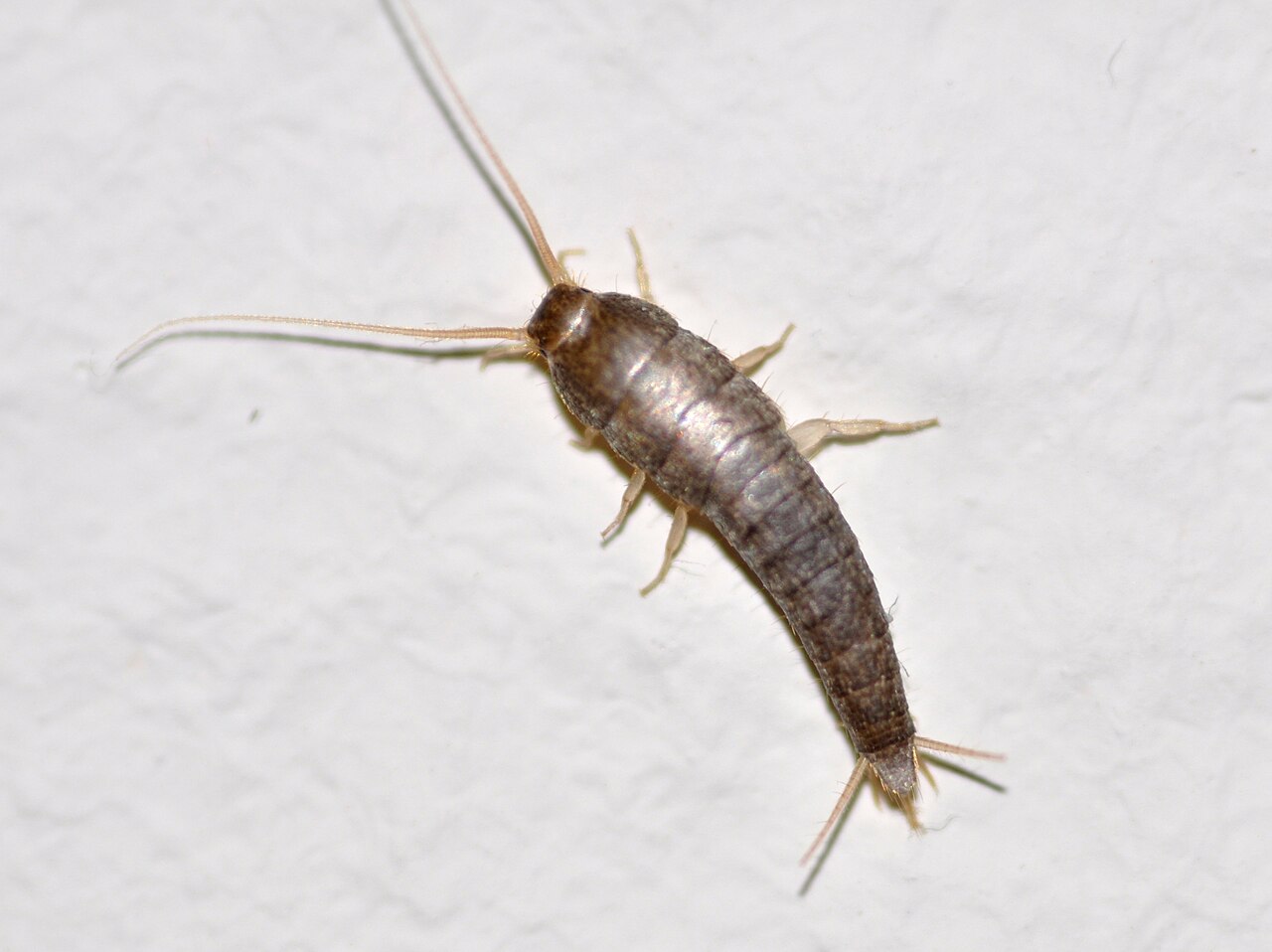

A bathroom provides a location, not an insect identity. Moisture-associated insects can be found there, but an insect beside a drain did not necessarily emerge from that drain. Start with the body and the exact place where it was observed.
Use a feature table to decide where to look next
The room narrows the context but leaves several possibilities. Minnesota Extension describes springtails as moisture-associated, while Maryland’s silverfish guide describes a different body form. These are comparison groups, not an exhaustive bathroom pest list.
| Visible feature | Next useful detail | Route |
|---|---|---|
| Tapered body with tail filaments | Clear view of the entire tail and antennae | Silverfish comparison |
| Tiny insect that jumps | Body image, approximate scale and exact damp surface | Springtail comparison through extension |
| A small flying insect | Resting-wing and whole-body view | Identification request; do not infer the source from the drain |
| Roach-like insect | Head shield, legs and body proportions | Roach lookalikes |
| An unresolved speck | Best original image and movement observed | Photo workflow |
Record what happened without provoking the animal to test it. “Jumped while I was watching” is useful. “Must be a flea because it jumped” closes the identification too early.
Distinguish the fixture from the source
Photograph the insect’s position relative to the sink, bathtub, door, or window. If you did not see it emerge from a drain, say “beside the drain.” This small distinction helps an inspector avoid starting from an unproven entry route.
Do not pour insecticides or improvised chemical mixtures into plumbing based on a visual guess. Management depends on the organism and source.
Map moisture separately
Use labels for the sink cabinet, shower edge, window and any nearby houseplant. For each place, record visible water or damp material, the date, and whether it is a recurring observation. Do not diagnose a concealed plumbing problem solely from insects.
If maintenance is needed, report the actual condition and follow up through the appropriate channel. Keep the repair date with your pest notes. A dry surface after repair is a useful maintenance observation even while the insect identification remains unresolved.
Follow one consistent observation route
On a later check, use the same accessible locations. Record whether there was an insect, visible moisture, both, or neither. Include any change in ventilation, cleaning or access so the comparison has context. Avoid repeatedly opening plumbing or applying chemicals to search for an imagined source.
If sightings continue, send the feature record and moisture timeline together. Ask the identifier whether the body can be resolved from the image and ask the maintenance professional about the actual water issue. Each question can progress without assuming the other has already been answered.
Decide which detail is missing
Use the clue finder to organize the evidence. If body details are too small to resolve, request identification through extension or a qualified professional. Tell them what was actually observed and which features are missing from the image.
Keep later findings in field notes with the same location labels. If sightings continue after a leak is repaired, that is a useful new observation. It does not establish that the repair failed or that the insects belong to a particular species.
Common questions
Does an insect beside a drain prove it emerged there?
No. Say “beside the drain” unless you directly observed emergence.
Does repairing a leak prove the insect problem is resolved?
No. Record the repair and subsequent sightings separately. Moisture maintenance and species identification answer different questions.
Can jumping alone distinguish fleas from springtails?
No. Movement is one observation. A useful comparison also needs the body, scale and context; seek identification if those details are missing.
What should I report after a leak is repaired?
Keep the repair date and subsequent insect and moisture observations separate. Use the same location labels so a professional can compare the sequence.
Sources and further reading
- University of Maryland Extension: Silverfish and Firebrats ↗
- University of Minnesota Extension: Springtails ↗
The observation checklists are our editorial organization of the topic. Linked organizations have not reviewed or endorsed this article.