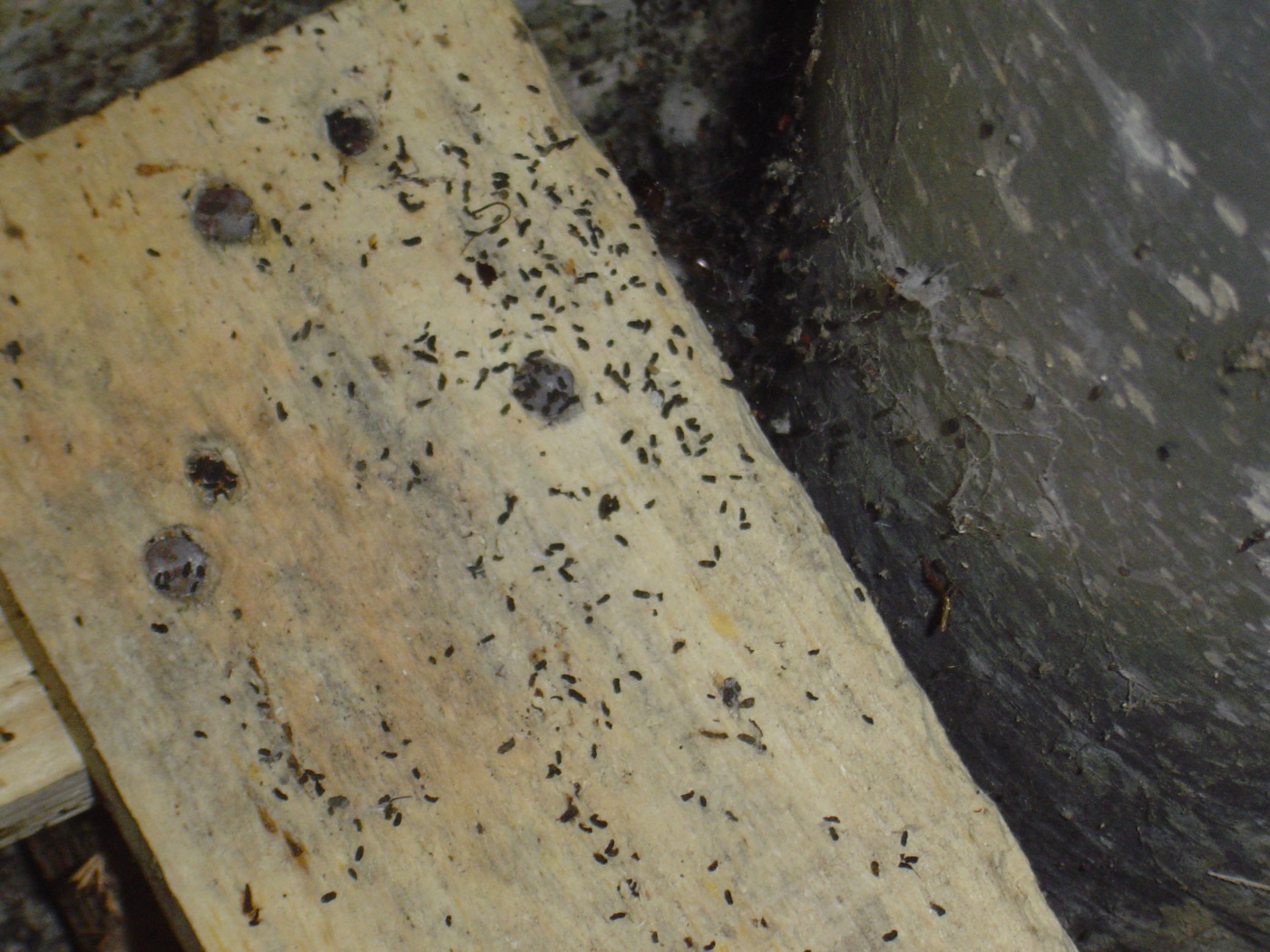

Field comparison: granular deposits and crack staining
San Diego County lists coffee-ground-like droppings and brown staining along cracks among cockroach signs. These descriptions concern the form and distribution of deposits; neither is specific enough to name the species.
A granular scatter is different from a flat ink-like stain or larger smooth pellets. Keep actual food particles, bed-area spotting, and possible rodent waste in the comparison when the setting supports them. An identified cockroach or egg case in the same inspected area adds more information than trying to diagnose a single black speck.
Look for a pattern
- Inspect sheltered kitchen and bathroom areas, especially behind drawers, near appliances, and under counters.
- Look for other signs in the same area, such as egg cases, cast skins, or a live cockroach.
- Photograph the marks and the surrounding area. Different pests can leave similar dark material.
Common confusion
Mouse droppings are separate pellets; some cockroach deposits appear as smaller specks or smears. Size alone is not a reliable identification.
A dark spot on fabric near a bed may have a different cause. Use the location and any insects found nearby before drawing a conclusion.
Map the spotting before cleaning
Record the exact surface: the underside of a shelf, drawer corner, cabinet hinge, or an open counter. Take a wide image and a close-up with consistent lighting. Keep deposits on fabric separate from deposits on a hard kitchen surface; context affects the alternatives an identifier considers. Do not treat every dark mark throughout the home as the same substance.
A speck does not supply a species name
A dark deposit may resemble dirt, a food crumb, another insect deposit, or an old stain. Shape alone in a phone image cannot reliably connect it to German, American, or another cockroach. Look for an identifiable insect or egg case and document it separately. A combined record gives a specialist more to work with than a large collection of isolated speck photographs.
Use dated observations to ask better questions
After appropriate cleaning, label the baseline date and exact location. If a mark appears later, photograph it before assuming it is the same material. Record any nearby live insect and the time seen. The useful question is whether identified cockroach activity is recurring in that location, not how many hidden insects a stain allegedly represents.
What to report in shared housing
Give maintenance a short location list and the clearest images, including any leak or gap observed nearby. State whether a cockroach was actually identified or only deposits were found. Ask for inspection findings and follow-up instructions in writing. Avoid assigning a neighboring unit or resident as the source without evidence; coordination works better when the report describes observable conditions.
Keep the context with the clue
Record the date, exact location, visible features, and what remains uncertain. Bring the record to a qualified identifier.
Add this finding to your evidence log →Common questions
Can roach droppings look like mouse droppings?
Some deposits can look similar in a casual photo. Compare the size, pattern, location, and any insects or egg cases nearby before drawing a conclusion.
Does a black stain prove cockroaches are active now?
No. A mark can persist after its source has gone and may have a different cause. Dated recurrence and an identified insect are more informative than color alone.
Can I estimate how many roaches there are from the droppings?
No reliable household population estimate follows from a photograph of deposits. Record actual sightings and locations and ask an inspector how to monitor the confirmed species.
Sources reviewed
These references support the identification notes. They do not imply that the authors have reviewed or endorsed this website.