FIELD JOURNALPest life cycles
Pantry moth life cycle: eggs, larvae, pupae, and repeat sightings
Understand pantry moth stages, why adults can appear after cleaning, and how to distinguish a lingering sighting from an overlooked food source.
IN BRIEF
Indianmeal moths pass through egg, larva, pupa, and adult stages. Larvae feed in stored products and may leave them to pupate. Stages can overlap, so one moth after cleaning does not date the infestation or prove a new one.
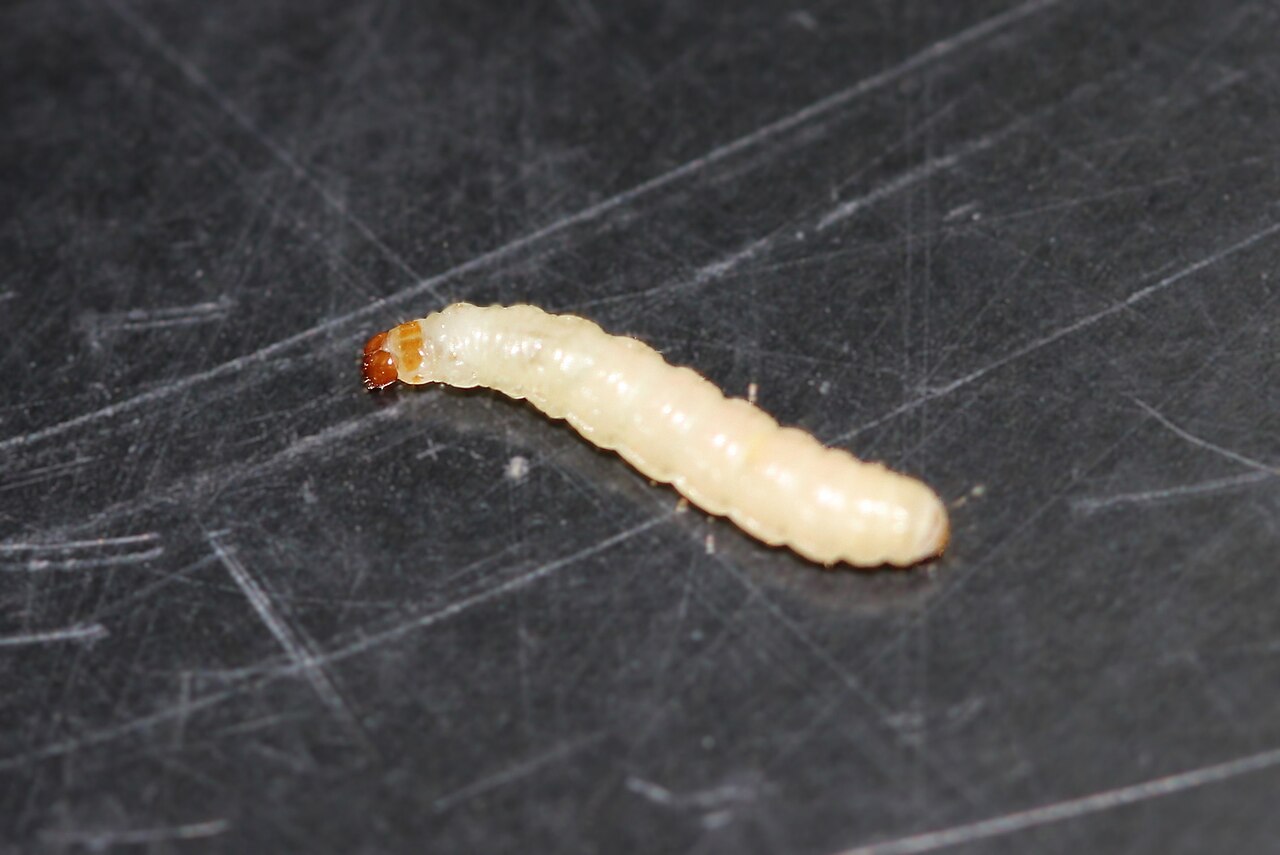

A pantry moth problem is easier to understand when you stop treating every sighting as the same event. A caterpillar in cereal, a cocoon at a cupboard joint, and a flying moth represent different stages and different questions. This article concerns Indianmeal moths, a common stored-food moth; use the pantry versus clothes moth comparison if the identity is uncertain.
The four stages and what each tells you
Colorado State University describes eggs laid near suitable food, feeding larvae, pupae, and adults. Mature larvae can travel away before forming cocoons. Its account also notes overlapping generations, so a home can contain several stages at once.
| Stage | Where the evidence may lead | What to do with the finding |
|---|---|---|
| Suspected egg | A close examination of an associated food item | Keep the label provisional if the photo cannot show identifying detail |
| Feeding larva | The particular package or material containing it | Photograph the product and insect separately; identify the affected source |
| Wandering larva | A source search beyond the sighting location | Record where it was found without assuming the wall is the food source |
| Pupa or cocoon | A sheltered place used for development | Keep the location and date distinct from the original food finding |
| Adult moth | Identification and follow-up monitoring | Record it as an adult, not as another larva or proof of a new food source |
This is a decision table, not a substitute for specimen identification. Use our pantry moth larva guide for physical comparison. If all you can see is a pale fragment, an “unidentified object” entry is more accurate than an egg count.
Why a precise countdown can mislead
Temperature and food quality affect development. Colorado State reports that larval maturation can take a month under favorable conditions and much longer otherwise. That describes one stage, not a guaranteed egg-to-adult schedule for your kitchen.
The purchase date is also not an infestation start date. Neither a recently opened package nor an old one establishes when insects arrived. Keep purchase, opening, discovery, and removal as separate dates. These distinctions are especially useful when discussing a product with a retailer or showing a professional what has already been checked.
Why adults can appear after cleaning
University of Minnesota Extension notes that adults may appear for up to three weeks after affected food is discarded. Continued sightings beyond that point warrant checking for an overlooked source. Treat this as a practical follow-up prompt, not a universal clearance test: it assumes the pest and source were correctly identified.
Do not restart an imaginary life-cycle clock every time a moth flies past. Instead, answer three questions: Was a food source actually found? What was removed? What stage appeared afterward? A “deep clean” with no identified source leaves a different unresolved question from removal of a package containing larvae and webbing.
A follow-up timeline without a false deadline
The following is an illustrative record format, not a treatment schedule or documented field case.
| Event | Example entry | Next question |
|---|---|---|
| Source found | “Package P2 contained a larva and webbing” | Were other susceptible products checked? |
| Source removed | “P2 discarded; shelf cleaned on October 16” | Which storage areas remain unchecked? |
| Later adult | “One adult on October 19; photograph A3” | Is the identification consistent with the original pest? |
| New food evidence | “Webbing in a different package, P7” | Does this identify another source needing attention? |
| Continued sightings | “Adults continue after repeated checks” | What product or inaccessible area needs professional assessment? |
Record an actual zero finding separately from a missed check. You can keep this timeline in the evidence log and export it before an inspection.
What monitoring traps can and cannot answer
Indianmeal moth pheromone traps attract males. They do not inventory eggs, larvae, or every female in the home. A quiet trap cannot certify that stored food is unaffected. Read the pheromone-trap guide before comparing counts, and use the monitoring calculator only when the setup is comparable.
If larvae are on the ceiling, continue with the ceiling-to-food source checklist. If the source is known and removed, use the storage record to organize replacement products. The useful endpoint is a resolved source question and a consistent follow-up record, rather than a promise that every household will be clear on the same day.
Common questions
How long is the pantry moth life cycle?
There is no single household countdown. Temperature and food affect development, and generations can overlap. Colorado State notes that larvae can mature in as little as a month, but often take longer; that is not the duration of the entire life cycle.
Do adult pantry moths eat food?
Indianmeal moth larvae are the feeding stage that damages stored food. Colorado State describes the adults as nonfeeding. An adult still matters because it may be part of a reproducing population.
Why are moths still appearing after I threw the food away?
Some insects may already have left the affected product to pupate. An overlooked product is another possibility. Use the dates and stages of subsequent findings to guide another source check.
Are pantry moth eggs on my ceiling?
A ceiling finding alone cannot identify eggs. Mature larvae and cocoons can occur away from food. Photograph the structure and compare it with the larva guide before naming a life stage.
Sources and further reading
The observation checklists are our editorial organization of the topic. Linked organizations have not reviewed or endorsed this article.