FIELD JOURNALPet-area evidence
Small insects near pet bedding: compare flea and carpet beetle clues
Compare flea and carpet beetle clues near pet bedding, protect your pet and find out when to seek identification or veterinary help.
IN BRIEF
A small insect near an animal’s bed can have several explanations. Observe the insect and its surroundings, protect your pet and seek the right identification before choosing a treatment.

A single clue or photograph cannot confirm a species, the extent of a problem, current activity or the safety of a space. Record what you can safely see and ask a qualified identifier or professional when the finding is unclear.
Begin with the actual insect or material
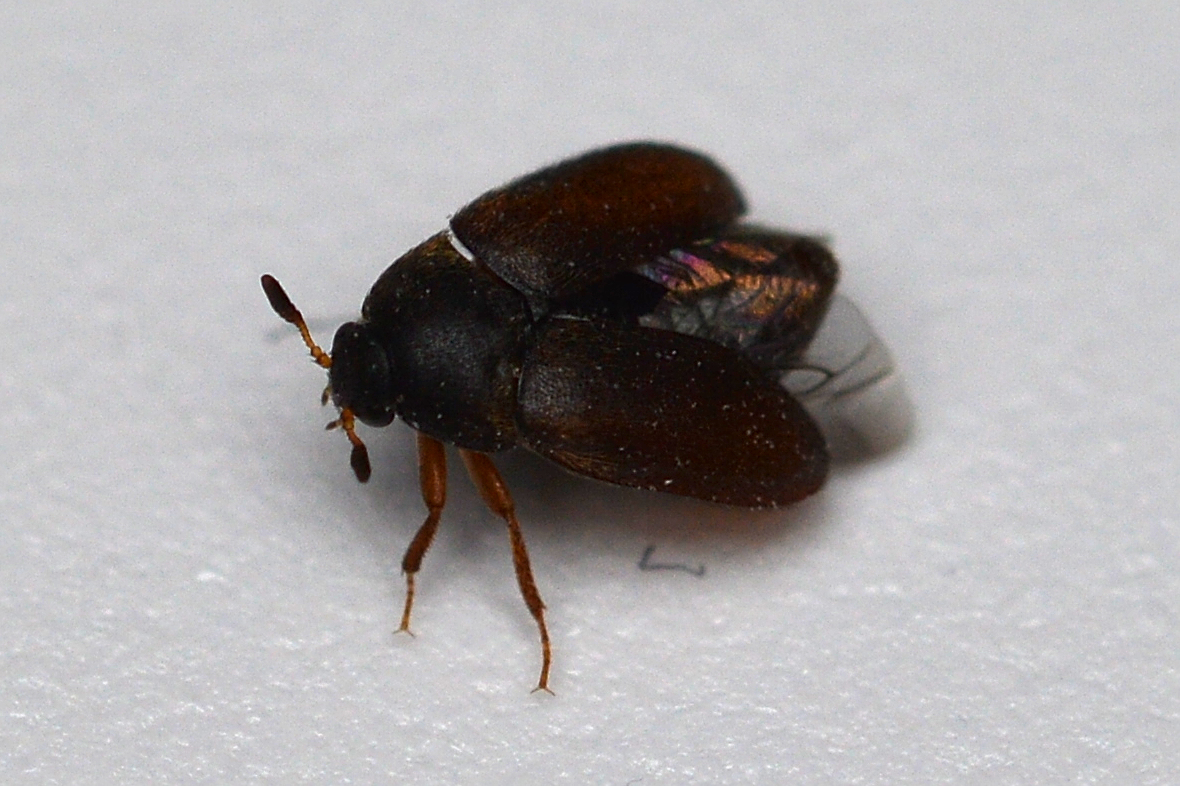

Pet scratching, a bite-like skin mark or a small dark speck is not enough to identify the cause. A veterinarian can assess your pet’s symptoms; an insect identifier can examine a specimen. Record whether you saw a jumping adult, a larva, a shed skin, an adult beetle, or only debris. Do not infer an insect’s identity from a pet’s reaction alone.
The image above is an adult black carpet beetle reference photograph. It is not a flea and does not show a carpet beetle larva. Finding one beetle near bedding does not establish an infestation, its source or what damaged a textile.
Compare life stages and likely surroundings
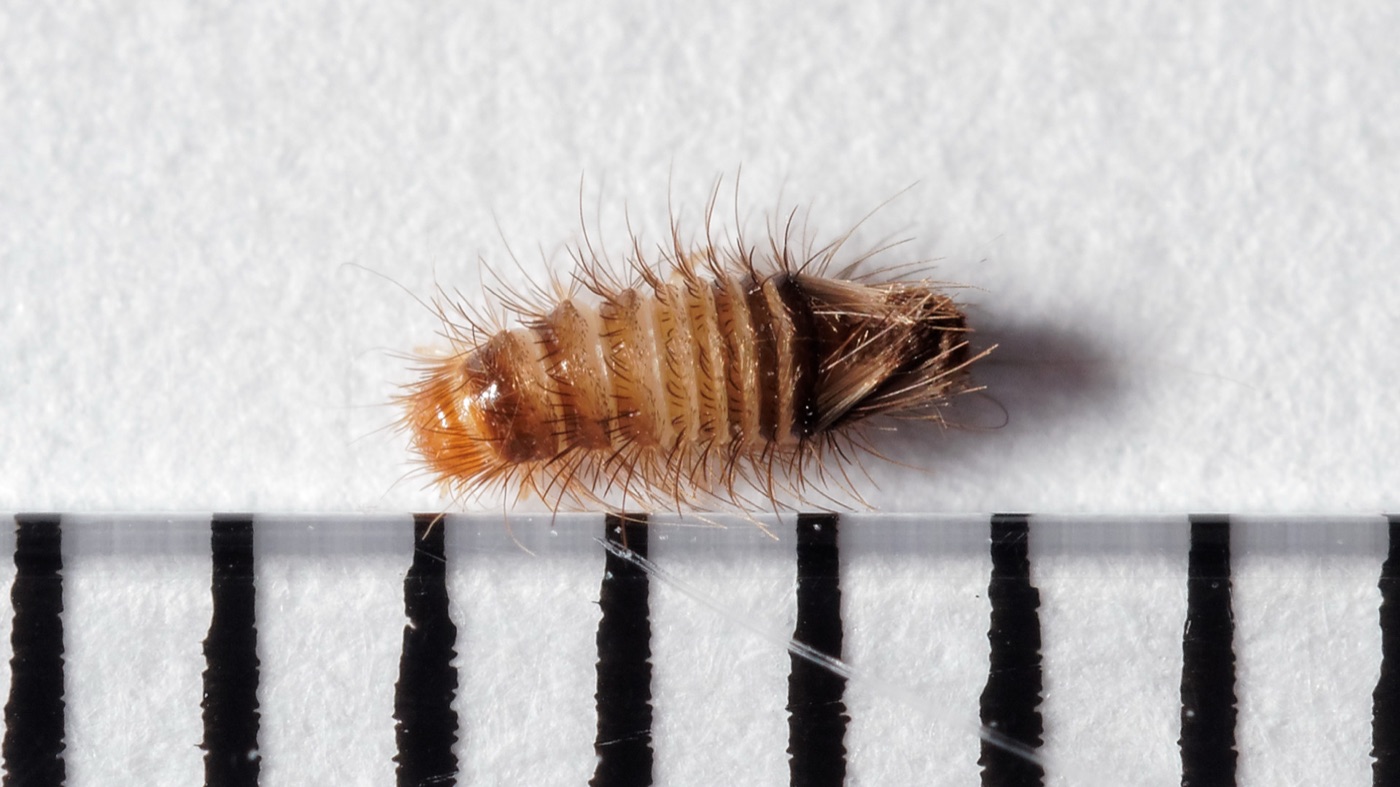

UC IPM explains that flea eggs can fall from an animal into the environment and that immature fleas may occur where a pet rests, including carpets and bedding. Flea larvae and adult fleas do not look the same, and pupae may be concealed by surrounding debris. Carpet beetle larvae can feed on animal-derived materials, including pet hair and some natural fibers; adults look different from the larvae.
Location helps form questions, not a verdict. Pet bedding can contain lint, food particles, hairs, shed skins and unrelated insects. Ask an extension service how to obtain an identification if the specimen or photographs are unclear. A single photo without a scale or diagnostic details may be insufficient.
Photograph without creating a new exposure
Take a wider view of the location and a close, focused image of the insect where you can do so safely. Add scale beside the subject only if you do not have to handle it or disturb waste. Note the date, whether it moved or jumped, its approximate size if measured, and what material it was on. Save the original file and avoid filters that alter the color or apparent shape.
If safe, place a specimen in a secure closed container and ask the identifying service for its submission instructions. Keep the container away from children and animals. Do not pull apart insulation, disassemble furniture or disturb suspected rodent waste for a better photograph.
Respond to your pet’s needs separately

If your pet is uncomfortable, has skin irritation or you suspect fleas, contact a veterinarian for an assessment and a product appropriate to that animal. Species, age, health conditions and other animals in the household can affect product selection. Do not use a product intended for one species on another unless a veterinarian and the product directions explicitly allow it.
Environmental and animal care are related, but a household spray is not a substitute for veterinary care. UC IPM warns against spraying clothing or bedding with insecticides for carpet beetles. Follow current label directions and professional advice rather than treating every textile before identification.
Plan a measured environmental check
Once the finding and safety issues are understood, inspect accessible pet resting areas and nearby edges. Ask whether the bed cover is washable and follow its care label; keep clean items separate from materials awaiting assessment. A normal cleaning record can include where and when you cleaned and where access was not possible. It does not certify that all stages have been removed.
If insects are identified as fleas, ask the veterinarian and pest professional how pet treatment and environmental management should be coordinated. If carpet beetle larvae are identified, inspect susceptible natural-fiber materials and accumulated pet hair as advised by the relevant guide. Different pests and life stages require different decisions.
Use repeat observations to choose the next step
Keep a dated log of sightings, identification, veterinary advice, cleaning and any treatment. Separate new observations from the original specimen and retain any product name and application date. If activity continues, provide that record to the professional rather than adding multiple uncoordinated pesticides.
A lack of new sightings is useful context, but it does not prove every room or animal is free of pests. Conversely, a single additional beetle does not establish a flea problem. The goal is to narrow the question with the strongest evidence available and protect the animal while it is being resolved.
Field comparison: record what you know
| Observation | Useful record or action | Limit |
|---|---|---|
| Animal scratching | A veterinarian can evaluate the symptom | Scratching alone does not identify a pest. |
| Jumping insect | Record a clear specimen or image if safe | Movement alone may not establish species. |
| Adult beetle | An identifier can check its body features | An adult is not a carpet beetle larva. |
| Hair, lint or cast material | Photograph its location and preserve context | Debris may have several explanations. |
Continue in the field guide
Common questions
Does a carpet beetle mean my pet has fleas?
No. Carpet beetles and fleas are different insects, with different life stages and management needs. An adult carpet beetle can occur near a window or bedding without demonstrating fleas or a textile infestation. Seek identification of the actual specimen and veterinary care for the animal’s symptoms.
Can I use a dog flea treatment on my cat?
Do not assume products are interchangeable. Select a product specifically appropriate for the animal, its age and health, and follow veterinary advice and the label. Consult a veterinarian before applying treatments in a household with more than one species, especially when pets may groom or contact each other.
Should I spray the bed before identifying the insect?
Avoid treating bedding or a pet resting place with a pesticide unless the product explicitly permits that use and the situation has been assessed. UC IPM cautions against spraying bedding or clothing for carpet beetles. A veterinarian and a qualified pest professional can advise on animal care and environmental treatment.
What if I only find hair and small specks?
Record what you can observe without assigning a cause. Hair, lint, food debris and pest material may look similar, and a photograph may not reveal the necessary features. Ask an identifier what specimen or close image would help, and do not disturb unsafe material to obtain it.
Why might sightings continue after cleaning?
A follow-up observation may reflect an untreated area, a later life stage, a different insect or another source; the original record alone cannot decide which. Keep dates, identification and cleaning details, then ask the professional whether further inspection or a change in the plan is warranted.
Sources and further reading
The observation checklists are our editorial organization of the topic. Linked organizations have not reviewed or endorsed this article.