FIELD JOURNALBedroom evidence
Carpet beetle larvae in bed: check the insect and nearby materials
Found a hairy larva or shed skin on bedding? Compare physical evidence, inspect nearby fabrics, and prepare a clear identification record.
IN BRIEF
A hairy larva on bedding may be a carpet beetle larva, but its location alone does not identify it or prove the mattress is the source. Compare the specimen and nearby materials. Skin marks cannot identify the insect.
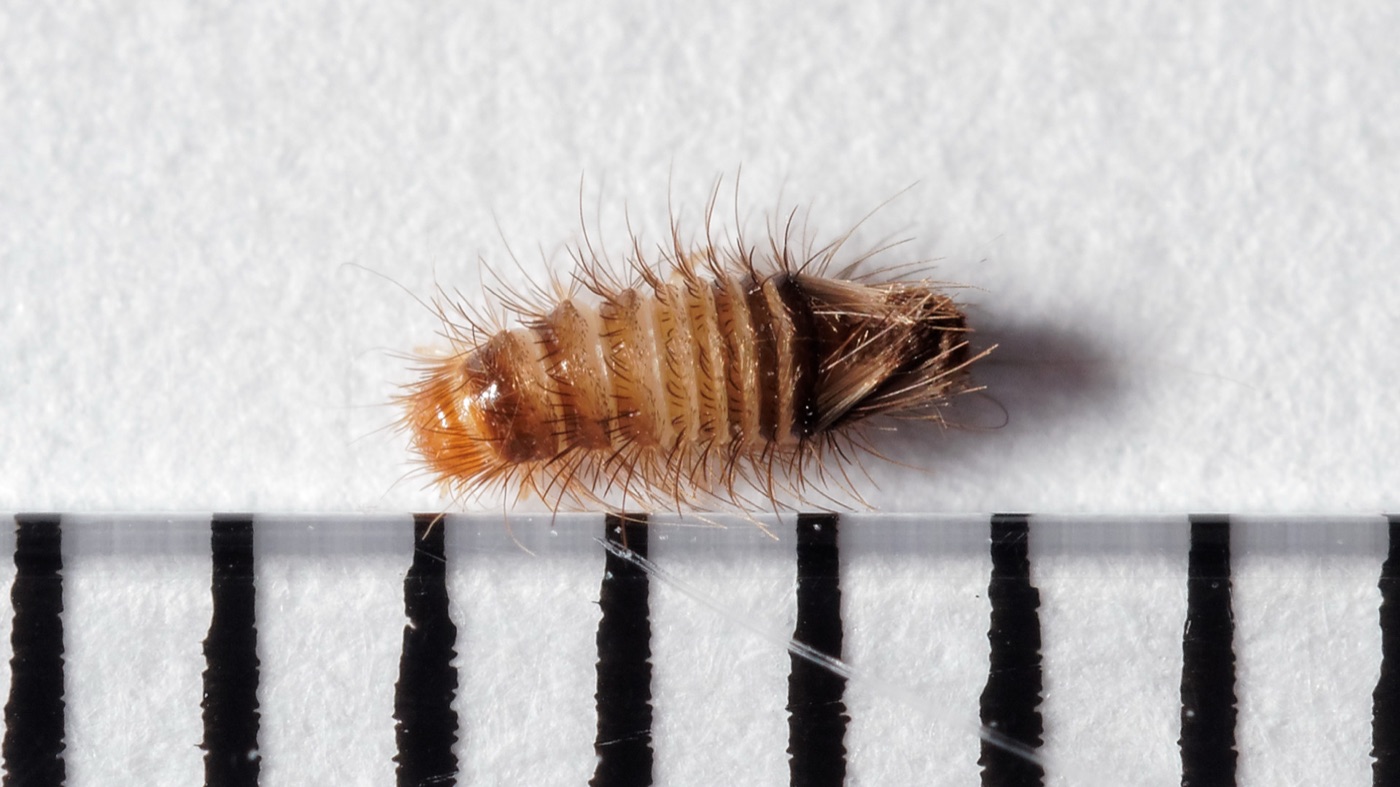

Finding something on a pillow or sheet is unsettling, but it does not answer where the insect developed. Keep the specimen’s location, identification, and possible source as separate facts. That prevents one small finding from becoming an unsupported conclusion about the entire bed.
Begin with the specimen, not the skin mark
Photograph the object before cleaning. A sharp side view, a view from above, and a nearby ruler are more useful than a close crop with no scale. Note whether it moved. An empty cast skin and a living larva require different descriptions.
University of Maryland Extension describes carpet beetle larvae as hairy insects associated with animal materials and accumulated organic debris, often in concealed places. The larvae can move between locations and leave shed skins as they grow. These facts explain why a finding deserves an item-level inspection; they do not establish that the bed is its source.
Use the carpet beetle larvae guide and bed bug comparison. If you are investigating skin symptoms, keep that question separate. EPA identifies bites as a poor indicator of bed bugs; physical evidence is needed.
Inspect in a controlled order
Our suggested inspection order is designed to preserve location information. It is not a treatment protocol. Check accessible items without tearing upholstery or moving heavy furniture unsafely.
- Record the exact place on the bed where the object was found.
- Inspect removable bedding separately, following its care instructions.
- Check accessible edges around the bed and nearby stored textiles.
- Record each item with visible larvae, skins, or damage separately.
- Photograph anything you cannot confidently classify before changing its location.
Do not empty every drawer into one pile. If evidence appears after several items are mixed, you lose the connection to the original item. Use a simple room sketch with labels such as “bed A,” “drawer B,” and “rug edge C.”
Build a useful materials record
Maryland Extension notes that larval food can include wool, feathers, hair, and other animal products, and recommends careful cleaning of concealed accumulation areas. Check care labels instead of assuming every fabric is the same.
| Item or area | What to record | What not to assume |
|---|---|---|
| Blanket or pillow | Material label; actual insects or damage | Every nearby item has the same problem |
| Under-bed storage | Which container was opened and what was seen | Stored items are automatically the source |
| Carpet edge | Photograph of debris, skin, or live insect | An old skin dates the current activity |
| Mattress seam | The specific object found | Every dark speck is bed bug waste |
For dark spotting, the bed bug stains guide explains the limits of visual interpretation. Do not use a household smear test as proof of a species.
Clean with the evidence and item care in mind
Once you have documented accessible findings, follow appropriate cleaning guidance for the identified pest and the material. Maryland Extension recommends thorough vacuuming of carpets, baseboards, concealed areas, and closets, with prompt outdoor disposal of vacuum contents. Follow fabric care instructions for laundering or professional cleaning.
Avoid choosing a pesticide from a photograph of an unidentified object. A product intended for room edges may not be permitted on bedding. If you need treatment advice, ask the professional to identify the pest and explain where the proposed product may be used.
Keep live insects and old skins separate
The shed-skin article helps you label these findings. For follow-up, record whether you found a live larva, an adult, an empty skin, or no visible evidence after an actual check. Do not turn a missed inspection into a zero count.
Create a case in the evidence log with the photographs and actions. A short record that preserves location is more useful than a large collection of unexplained close-ups. If you move an item to clean it, record where it went so the next finding can be interpreted.
Ask for help when the evidence does not fit
Request identification when the photograph is unclear, different insect forms are present, or repeat findings continue despite a focused inspection. Share the material labels and original photographs through the service’s stated process. For a valuable textile, seek advice that accounts for conservation and fabric care as well as pest management.
Your next step should follow the evidence you have. Finding a larva on a sheet does not, by itself, establish a need to discard furniture or treat every room.
Common questions
Does a carpet beetle larva on the bed mean bed bugs?
No. These are different insects. Photograph the actual specimen and compare body features; do not identify a pest solely from where it was found.
Should I throw away the mattress?
A single unidentified finding does not establish that a mattress needs disposal. Identify the insect, inspect relevant materials, and discuss persistent or inaccessible evidence with a professional first.
Are the empty hairy shells still useful?
Yes. Photograph them and record the location, but label them as possible shed skins rather than live larvae. They do not give a reliable date of activity.
Can a rash tell me which pest is present?
No. EPA says bites are a poor indicator of bed bugs. Seek medical advice for concerning skin symptoms and use physical evidence for the pest-identification question.
Sources and further reading
The observation checklists are our editorial organization of the topic. Linked organizations have not reviewed or endorsed this article.