_-_Saskatoon,_Saskatchewan_2015-03-17_(02).jpg)
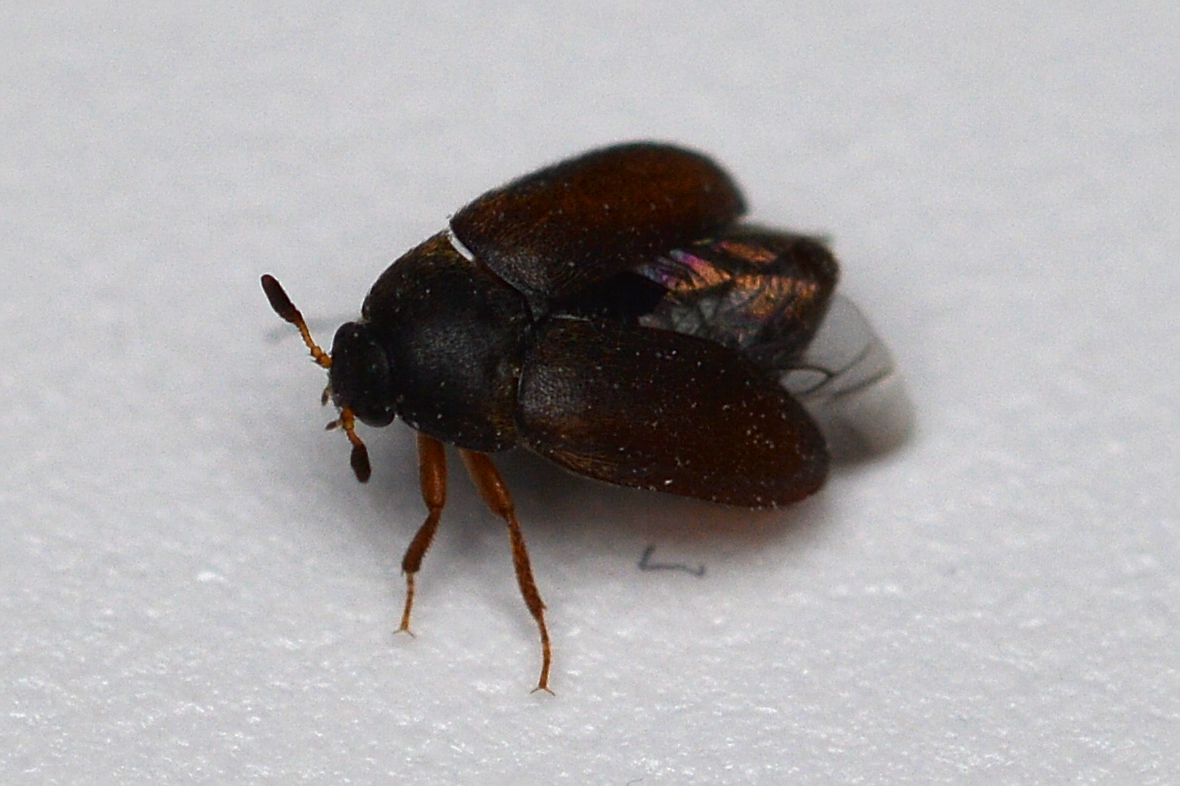
Field comparison: a dark adult and a hairy larva
Maryland Extension describes the adult black carpet beetle as an elongated oval, dark brown to dull black. The varied carpet beetle is rounder and patterned. The black carpet beetle’s larva has a carrot-like outline and a rear tuft of longer hairs.
A solid dark adult does not need to resemble its hairy immature form. Conversely, a black oval without visible beetle features is not enough for a species match. Compare antennae, the complete outline, and the correct life stage before linking the insect to fabric damage.
What to check and record
- Record whether the specimen is a hard-bodied adult or an elongated larva.
- Photograph fabric damage and any larvae separately, with a scale where safe.
- Check the name and life stage in the reference-photo caption before comparing it with your specimen.
Compare the alternatives
Varied carpet beetle larvae are often shorter and more bristly-looking than black carpet beetle larvae. The two should not be treated as interchangeable photos.
An adult carpet beetle is not a bed bug. Use wing covers, body form, and a proper identification rather than the room where it was found.
A black adult is only one part of the comparison
Frame the complete beetle, including antennae, and record body length. Reflections can obscure a dark insect’s outline, so a second view may be more useful than extra magnification of the first. Do not assume every black beetle on a sill belongs to this species. A named reference is a comparison aid, not a substitute for the specimen’s features.
Adults and larvae answer different questions
Carpet beetle larvae are the stage associated with damage to susceptible materials. An adult sighting helps an identification investigation, while larvae and affected items help locate a feeding problem. Keep both kinds of evidence in the record and label the life stage. The adult reference here should not be used to reject a very different-looking larva.
Reference: UC IPM: Carpet Beetles
Use the room as a map, not a diagnosis
Mark the window where the adult was found and any separate storage location where a larva, skin, or damaged object appeared. Include the date of each. If these are far apart, retain that fact instead of drawing a presumed route between them. Ask the identifier whether the records support a shared explanation and which materials merit closer checking.
A useful follow-up is tied to an item
After an identification and appropriate item care, record the condition of the affected object and any new evidence near it. Avoid using the total number of miscellaneous black insects at windows as the sole measure of a textile problem. Ask which findings would warrant another inspection and keep photographs of the original damage for comparison.
Keep the context with the clue
Record the date, exact location, visible features, and what remains uncertain. Bring the record to a qualified identifier.
Add this finding to your evidence log →Common questions
Are all black beetles carpet beetles?
No. Many beetles are dark. A close-up showing the body and antennae is needed before assigning this name.
Can an adult beetle tell me which rug is affected?
No. An adult’s location does not identify a larval food source. Look for evidence associated with a particular item, including larvae, skins, or damage.
Why does the larva look nothing like the adult photo?
Beetles change form during development. Compare the correct life stage and ask for identification if the larval features are unclear.
Sources reviewed
These references support the identification notes. They do not imply that the authors have reviewed or endorsed this website.