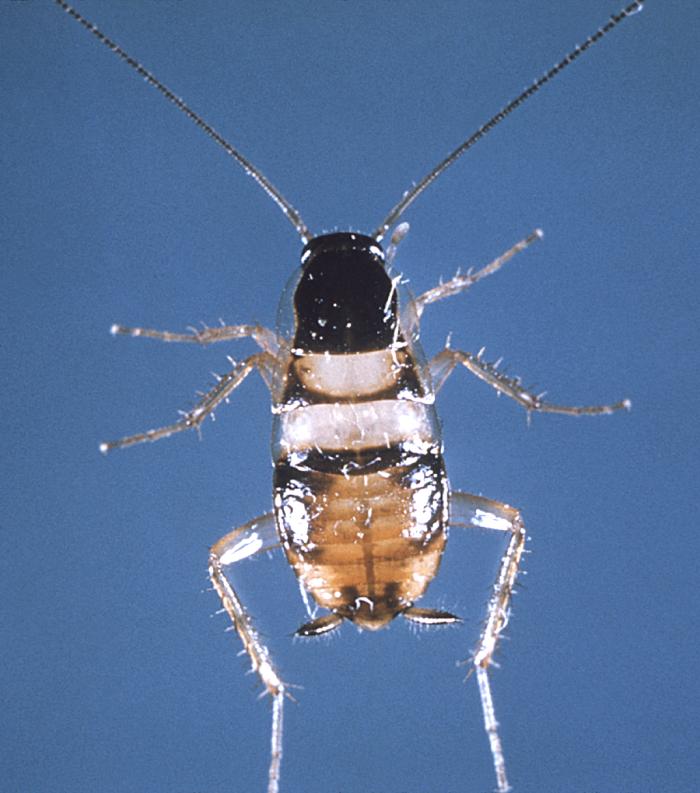

Field comparison: two pale transverse bands
San Diego County identifies two pale bands across the nymph’s back and across the base of adult wings. The useful observation is a cross-body pattern, rather than the paired lengthwise pronotal marks used for adult German cockroaches.
If an intact insect clearly shows the latter pattern, compare German and its close lookalikes instead. Wing development and viewing angle can obscure a brownbanded pattern, so a nymph reference should not be treated as a perfect picture of every adult.
Reference: San Diego County: Cockroach species and signs · UF/IFAS: German Cockroach
What to check and record
- Photograph the direction of the bands: across the body or lengthwise behind the head.
- Record the height of the sighting and the object involved, such as a shelf, frame, or piece of furniture.
- Observe accessible surfaces only. Do not open electrical fittings or powered appliances to search for insects.
Compare the alternatives
German cockroach adults have two dark lengthwise marks behind the head. Brownbanded markings run across the body.
Adults differ by sex: males have longer wings than females. A match to only one photo can therefore be misleading.
Use the direction of the markings
Describe whether the contrasting marks cross the body or run lengthwise behind the head. Take the photograph from above and keep the whole insect in view. The image here shows a nymph, so an adult may not display the pattern in exactly the same way. Mark unclear features as unclear instead of using image enhancement to invent a sharper boundary.
A useful room map includes height
Add a height or furniture location to each sighting: near floor level, upper shelf, wall frame, or underside of a desk. A room-only record loses a helpful distinction for this species. Include an incoming piece of furniture in the history if relevant, but do not assume it is the source solely because insects were later found in the room.
Document an attached case without detaching it
Photograph the case and the surface it is attached to, then include a wider view of that object in the room. Keep the case record separate from the insect photograph until an identifier connects them. Do not dismantle an electrical fitting or energized appliance. An inaccessible location belongs in the inspection brief as a place requiring appropriate professional access.
Questions for a targeted assessment
Ask which species features are visible, whether the inspected locations fit the confirmed insect, and which additional rooms or objects should be checked. Save a record of what was examined. The purpose is to avoid a report that says only “kitchen roaches” when the actual observations involve furniture or higher sheltered surfaces elsewhere.
Keep the context with the clue
Record the date, exact location, visible features, and what remains uncertain. Bring the record to a qualified identifier.
Add this finding to your evidence log →Common questions
Does a dry room rule out cockroaches?
No. Brownbanded cockroaches can use relatively dry indoor locations. A moisture assumption should not replace identification.
Can I identify this species from a banded photograph alone?
Bands are a useful clue, but life stage, wing coverage, and the complete body should also agree. A blurry stripe or reflection is not enough to confirm a species.
Should I open electronics to look for egg cases?
No. Record accessible evidence and tell the professional about the location. Do not expose wiring or dismantle powered equipment for an identification photograph.
Sources reviewed
These references support the identification notes. They do not imply that the authors have reviewed or endorsed this website.